Vein-Cut vs. Cross-Cut Travertine: How to Choose the Right Look
Vein-cut and cross-cut travertine can come from the same block, but they create very different projects. One emphasizes linear movement; the other gives softer clouds and circular mineral patterns.
The Cut Changes the Stone You Are Buying
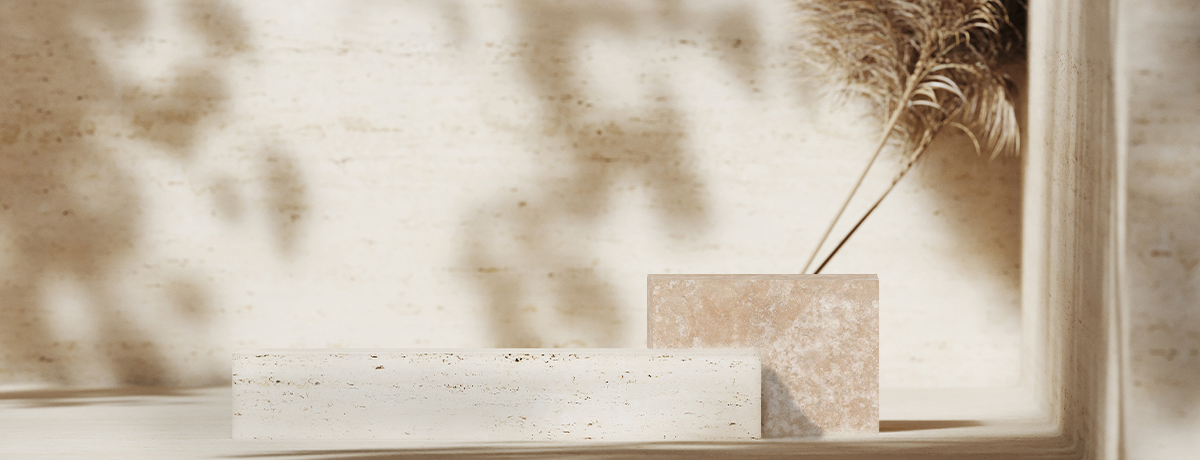
Travertine is layered as it forms, so the saw direction decides what the buyer sees. Vein-cut travertine is cut across the bedding plane to expose long, directional lines. Cross-cut travertine is cut with the bedding plane to reveal softer clouds, pools, and mineral blooms. Before comparing prices, decide whether your design needs architectural direction or a quieter field surface, then review the available slabs and tiles in our shop.
Choose Vein-Cut for Direction and Scale
Vein-cut travertine is strongest when the surface needs rhythm: hotel lobbies, reception desks, bathroom walls, bookmatched slabs, fireplace surrounds, stair risers, facade panels, and long corridor floors. The linear movement helps align panels and makes large areas look intentional. Etrusco is especially effective in vein cut because its grey tone and pronounced bands create a contemporary, high-contrast architectural surface.
Choose Cross-Cut for Calm Continuity
Cross-cut travertine is the better specification when the goal is a warmer, more even surface. The pattern is less directional, so it is easier to rotate tiles, blend batches, and create calm floors in kitchens, bathrooms, terraces, spa areas, and residential living spaces. Montemerano Classico performs well here because its warm beige movement gives depth without forcing every joint to follow a strict line.
Match Cut, Finish, and Sample Approval
The cut should be approved with the finish, not after it. Vein-cut polished slabs make movement sharper; honed cross-cut tiles feel quieter and more practical underfoot. For light interiors where the client wants minimal visual weight, compare Bianco Maremma samples in both orientations. If the project is a hotel, retail space, or large residence, our commercial projects show how panel direction affects the final installation, and you can request a sample before confirming the production run.
Related Finish Decisions
Cut direction is only one part of the specification. If the stone will be walked on, cleaned frequently, or installed in a wet area, compare the finish decision in our filled vs unfilled travertine guide before ordering.