Cross-Cut vs. Vein Cut Travertine: Which One Is Right for Your Project?
Travertine can be cut with or against the vein, creating entirely different visual effects. Understanding the distinction between cross-cut and vein-cut helps you select the perfect look for your design.
Choosing the Right Cut
You have decided that travertine is the stone of choice for your project, a beautiful, luxurious material that adds undeniable beauty, character, and functionality to any design. But travertine is versatile in many ways, and its appearance can change dramatically depending on how it is cut.
How Veining Is Formed
Travertine is formed by the rapid precipitation of calcium carbonate from hot springs, which over hundreds of thousands of years create stratifications that reflect the particular geomorphology of the terrain. These geological layers produce the mesmerizing veining that makes travertine so distinctive.
Cross-Cut: Soft Swirls and Clouds
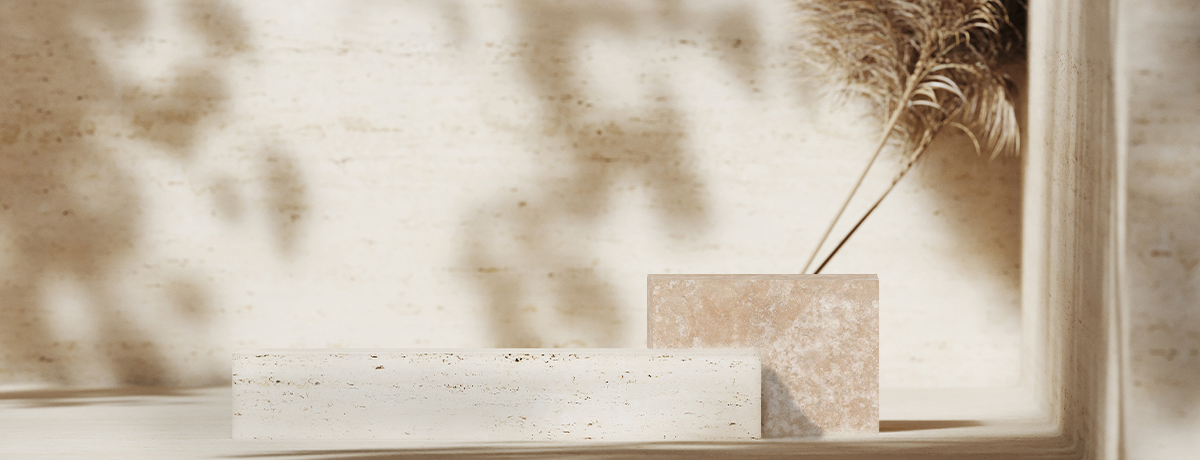
When travertine is cut parallel to the natural bedding plane, you get a cross-cut. This reveals a softer, more clouded pattern with gentle swirls and circular formations reminiscent of ripples on water. Cross-cut travertine is ideal for creating serene, understated surfaces, especially in warm stones such as Montemerano Classico.
Vein-Cut: Dramatic Linear Movement
Vein-cut travertine is sliced perpendicular to the bedding plane, revealing long, linear veining patterns with dramatic movement. This cut produces a more architectural, structured appearance that works beautifully for feature walls, facades, and spaces where you want bold visual impact. Etrusco is particularly strong when the brief calls for rare grey travertine with a pronounced directional line.